
“You always know what to do.”
It was said so casually that you hardly noticed it.
The conversation had drifted from one family issue to another. Someone couldn’t decide whether to take a new job. Someone else was upset over something that had happened a few days earlier. Before long, everyone had turned towards you, waiting for your opinion. You listened, asked a few questions, suggested a solution, and just like that, the discussion moved on.
Nobody thought much of it.
Neither did you.
It was only later that night, while replaying the day in your mind, that something felt different. It wasn’t the conversation itself. It was the quiet assumption beneath it—that somehow, you would always know what to say, always know what to do, and always be available when someone needed you.
It wasn’t a burden you remembered choosing.
Yet somehow, it had become yours.
It Begins So Quietly
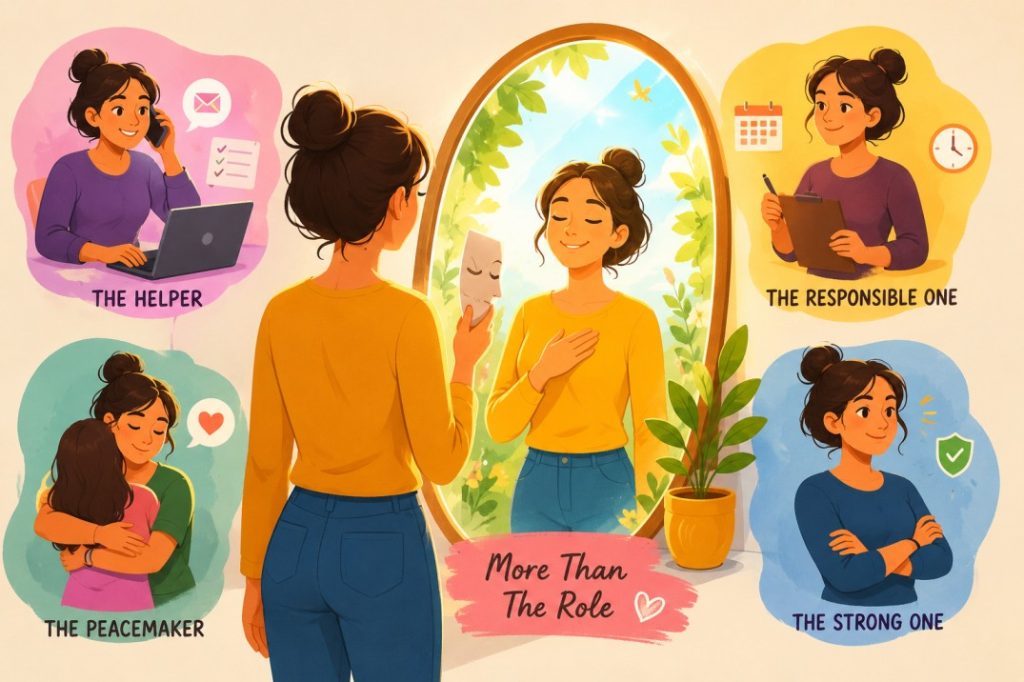
Most of us don’t wake up one morning and decide to become the responsible one, the peacemaker, or the strong one. These roles rarely arrive with an announcement. They slip into our lives so gently that we barely notice them.
Perhaps you were the child who didn’t ask for much because your parents already seemed overwhelmed. Maybe you became the one who settled arguments between siblings because you couldn’t bear the tension at home. Perhaps you discovered that whenever you stayed calm, solved problems, or put other people’s needs first, you were appreciated for being “mature.”
At the time, it didn’t feel like you were losing a part of yourself. It simply felt like you were growing up.
Years passed, and those small moments quietly became habits. The habits became expectations, and before long, they became your identity. People no longer saw these as things you did. They began to believe this was simply who you were.
The Compliment That Slowly Becomes an Expectation
Being called responsible, dependable, or caring feels good. These are qualities most of us are proud of, and rightly so. They help us build meaningful relationships and earn the trust of the people around us.
The difficulty begins when those qualities stop being choices.
You start answering calls even when you’re exhausted because you’re worried someone might feel unsupported. You keep saying “yes” to one more favour, one more responsibility, one more commitment because turning people down feels uncomfortable. You become the person who remembers everyone’s birthdays, checks in after difficult days, and notices when someone isn’t themselves. Gradually, you become so busy looking after everyone else’s world that you stop paying attention to your own.
Nobody asks you to carry all of this.
But nobody offers to carry it with you either.
One Day, Something Feels Different
It doesn’t happen during a big argument or a dramatic life event.
It happens on an ordinary day.
Someone calls to talk through a problem, and for the first time, you silently hope they won’t. A message appears on your phone, and instead of feeling happy to help, you feel tired before you’ve even replied. Someone says, “I knew I could count on you,” and instead of feeling appreciated, you feel strangely heavy.
That feeling often brings guilt.
“Why am I feeling this way? They’ve always depended on me.”
“They’re not asking for anything unreasonable.”
“Maybe I’m just being selfish.”
But perhaps it isn’t selfishness at all.
Perhaps it’s the quiet exhaustion that comes from carrying a role for so long that you’ve forgotten what it feels like to put it down.
The Person Behind the Role
Roles are useful. They help families function, friendships survive difficult seasons, and workplaces run smoothly. The problem isn’t that we play them. The problem is that we sometimes forget there is a person behind them.
Behind the helper is someone who also needs support.
Behind the peacemaker is someone who sometimes feels angry and hurt.
Behind the strong one is someone who gets tired.
Behind the responsible one is someone who longs, just once in a while, to let someone else take charge.
The world often rewards us for the roles we play, but our hearts quietly long to be loved beyond them. Not because we’re useful. Not because we’re dependable. Simply because we’re human.
Perhaps that’s why the people we feel safest with are the ones around whom we don’t have to perform. We don’t have to be wise all the time. We don’t have to have the answers. We don’t have to keep everyone comfortable.
We can simply be ourselves.
Healing Doesn’t Mean Becoming Someone Else
There is a misconception that letting go of a role means becoming careless or indifferent.
It doesn’t.
The responsible person doesn’t stop caring.
The helper doesn’t stop helping.
The peacemaker doesn’t become argumentative.
The difference is that these qualities begin to come from choice instead of obligation. You help because your heart wants to, not because guilt demands it. You support others without believing their happiness is entirely your responsibility. You begin to understand that saying “no” occasionally doesn’t make you less loving. It simply makes you more honest.
Healing often begins with that honesty.
Not the honesty we offer others, but the honesty we offer ourselves.
The quiet admission that perhaps we’ve spent years trying to earn love by becoming indispensable, when all along, we were worthy of love simply by being ourselves.
Pause & Reflect
Take a quiet moment and ask yourself:
- What role do I naturally play in my relationships?
- When did I first begin carrying this role?
- Do I still choose this role, or do I feel obligated to keep playing it?
- What part of myself has been waiting patiently behind it?
A Small Practice
Putting the Role Down
Sit comfortably and close your eyes.
Take three slow, gentle breaths.
Now bring to mind the role you play most often—the helper, the strong one, the peacemaker, the responsible one, or whichever role feels familiar to you.
Imagine placing that role on the chair beside you.
For just a few moments, allow yourself to sit without it.
Notice how your body feels when you no longer have to carry it.
Place one hand on your heart and silently repeat:
“I honour the role that helped me.”
“I release the belief that I must always carry it.”
“I am enough, even when I simply allow myself to be.”
Take one final deep breath and gently open your eyes.
Sometimes healing doesn’t begin by becoming someone new. Sometimes it begins by remembering that beneath every role, there has always been a whole person waiting to be seen.
Closing Thought
The roles we learn often help us navigate life, but they were never meant to become the whole of who we are. Real freedom begins when we realise that we can still be loving, kind, and dependable without losing ourselves in the process.
A Gentle Truth
You were never born to play a role for the rest of your life. You were born to live as your whole, authentic self.
Leave a Reply